Thinking Beyond Physical Safety to Support Mental Health in Construction Workers
The pressures of construction work go beyond the inherent dangers of a jobsite. Learn how employers can better support mental well-being in their workforce.
April 20, 2026
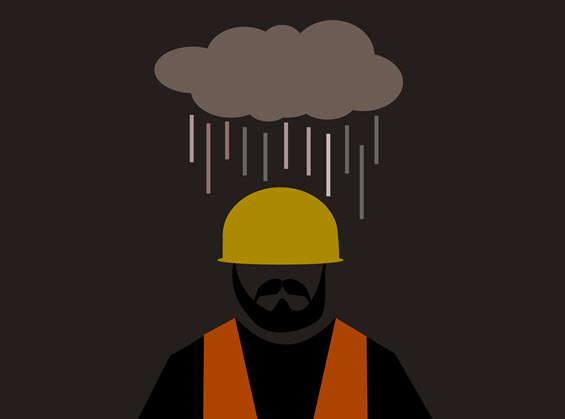
Whether working on dangerous roadways, aging infrastructure, or operating massive equipment, construction workers face risks at every turn. While employers prioritize physical safety, mental health and well-being are often given less attention, despite ongoing efforts to reduce stigma within the industry. In fact, a recent study found that nearly two-thirds of construction workers in the U.S. experienced anxiety or depression in 2025.
“Construction workers put their lives on the line every day in hazardous job sites,” said Carrie Daufenbach, Client Engagement Manager at Safety National. “Coupled with grueling hours and physically demanding tasks, it is no surprise that many also struggle with significant mental stress. Leaders must address mental health alongside safety training, taking a holistic approach to employee well-being.”
Below, we explore the leading causes of mental health issues in construction, why symptoms are often overlooked, and how employers can help change the trend.
What trends are contributing to mental health issues in construction workers?
Construction workers’ job duties are often physically demanding, which can be a breeding ground for a host of musculoskeletal disorders or other injuries. Although demand for these roles remains high, work hours can be inconsistent and heavily influenced by unpredictable weather conditions. These positions are typically also hourly roles, so paychecks may also be inconsistent, leading to financial pressures. Together, these factors can disrupt work-life balance and strain relationships with family and friends, further contributing to mental health challenges.
Why are mental health and well-being worsening in the construction industry?
Many employees hesitate to speak openly about mental health due to the industry’s longstanding “toughness” culture. Despite progress in the industry, the topic may still be considered taboo for many. Consequently, workers fear judgment from colleagues who may see mental health issues as a sign of weakness.
With limited access to paid sick leave or mental health resources, employees may not have a reliable support system either. Unlike physical safety, mental health is not always properly emphasized in training, which can prevent important conversations from happening.
How can construction employers help break the cycle?
Employers can start by acknowledging and adding mental health awareness as part of standard safety training. Training in tandem with physical safety training can lessen the stigma associated with addressing mental health issues. Supervisors should be able to recognize when a worker is in distress. Even minor incidents on a job site can signal that an employee may be struggling. Training should extend beyond onboarding.
Ongoing discussions, like toolbox talks, can reinforce its importance on the jobsite. Management can benefit from the same type of regular refresher training courses. When available, employees should have easy, identifiable access to support, like help hotlines or employee assistance programs. If they are comfortable discussing the issue with management, it is important that workers feel safe and understood.
The construction industry has one of the highest suicide rates among all professions, with rates up to five times higher than the general population. Reducing that number will require a sustained effort to break the stigma and prioritize mental health, and employers play a key role in opening the door to meaningful change.
The Challenges of Third-Party Hauling

Using Leading and Trailing Indicators to Reduce Law Enforcement Risk

Enhancing Claims Outcomes Through Quality Audits

5 Key Insights from RIMS 2026

Beyond “Who’s Liable?”: Managing Safety on Multi-Employer Job Sites

Types of Injectables Used in an Injured Worker’s Pain Management

Using AI Gun Detection Technology to Enhance Workplace Safety

Overcoming Setbacks in an Injured Employee’s Return-to-Work Process

4 Practical Steps for Managing Age-Related Risks
Thinking Beyond Physical Safety to Support Mental Health in Construction Workers

5 Key Insights on Distracted Driving That Employers Need to Know
The Causes, Care, and Recovery of Traumatic Brain Injuries

Safely Using Stair Steps When Stocking in a Retail Environment
5 Things to Know About Amputations Following a Catastrophic Injury
3 Rapidly Evolving Risks Facing Public Entities

How Claims Adjuster Decisions Influence Recovery Timelines

Rethinking Privacy Exposure in Cyber Liability

3 Key Pain Management Cost Trends in Workers’ Compensation Claims
5 Risk Management Considerations for an Aging Workforce

Reducing Caregiver Burden in Families of Injured Workers

Insights from Losses: Employer Responsibility in Managing Driver Risk

Understanding the Severity and Treatment of Catastrophic Burn Injuries

High-Risk Handoffs in Patient Care Transitions

A Catastrophic Injury Checklist for Employers